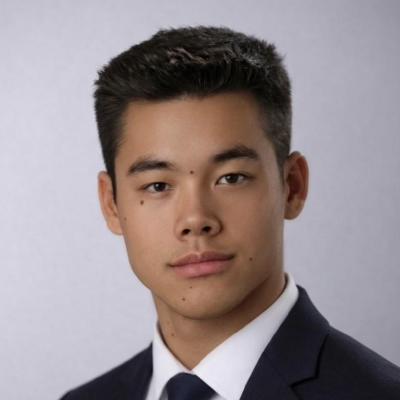
Founding product engineer at Mozart AI, building a browser-based AI music studio used by 250K+ people. I build the tools, and study the models, that let people make music with machines.
Before London: three theses on generative audio and four textbooks in the Dartmouth curriculum. Also a D1 swimmer with school records, and a multi-instrumentalist with Grammy-studio credits.
Build
The browser-based AI music studio, shipped end to end across web, mobile, and backend to 250K+ users and 1M+ generated songs. I led the songs-first redesign of the flagship Library to production, built the generative Layers surface UI end to end, and took real-time collaboration from prototype to production. Read the case studies.
A comparative harness for six music-generation models behind one provider seam: CLAP similarity, stem-separation quality, FAD, speaker similarity, a song-form-aware lyric WER, and Bradley-Terry human A/B ranking, with an LLM layer that turns scorecards into plain-language verdicts.
An AI collaborator that speaks and listens inside a live session. Biased streaming speech-to-text with music-domain vocabulary, tuned voice-activity windows against a room full of music (adversarial input for STT), and refactored turn ownership so one utterance gets exactly one reply.
Surface-agnostic onboarding where a step advances when the user performs the real gesture rather than clicking next: conditional success/failure branching, guaranteed surface restoration, and analytics that measure learning instead of clicking.
An AI-native DAW built solo: C++ audio engine on Tracktion, Python ML services, VST/AU hosting, and real-time chord co-creation backed by an RL-tuned transformer. The prototype that led Mozart AI's CEO to recruit me; validated with 115 musicians across five user studies. Click through for the two-minute demo.
A Go engine that remembers. DataGo wraps KataGo's public networks in a retrieval layer so expensive search results get reused across games rather than recomputed, and it beats the engine it wraps on 90% of stress-test positions with no retraining. The surprise is how rarely retrieval needs to fire: about 5% of positions.
An information-edge agent for prediction markets: it screens 1,200+ live Polymarket questions for ones a local news source would resolve before the crowd notices, discovers and monitors the relevant channels, and classifies incoming messages as evidence. It surfaces the signal and stops there; the trade stays a human decision.
Research
The through-line: tools that listen with me, and models that behave less like oracles and more like instruments.
How should a DAW change when generation is native to it? Five within-subjects studies with working musicians: time-to-satisfaction cut 50-89%, reported workload down 47-74%, median SUS 85 from professional producers.
A 1.08B-parameter token-domain U-Net that jointly reverses five audio degradation types by operating in EnCodec's 24 kbps token space rather than raw audio, cutting data-loading cost 40x. Earned Sigma Xi distinction.
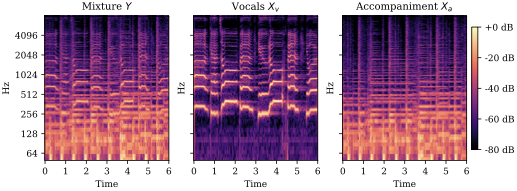
Four separators on one shared front end, from Robust PCA through an unrolled deep sparse coder, benchmarked against oracle masks. The finding is the monotone trend: the more structure the model learns, the closer it gets to the ceiling. Every method ships playable before-and-after audio.
First demonstration of long-form speech reconstruction from federated-learning gradients under CTC loss, exposing speaker-identity leakage and evaluating defenses.
Hear it
The research, audible. And the thesis album, playable.
Switch layers while it plays. The vocal isolation is my unrolled sparse-coding model, working on a real mix.
Library
4 textbooks written for Dartmouth courses, plus the theses. Browse the shelf.
The story so far
Founding product engineer at Mozart AI, London. Completed the two-year Dartmouth M.S. (AI, music, and signal processing) in nine months alongside it, with the top grade in all courses but one.
Graduated with honors in both degrees, engineering and music, on two simultaneous honors theses: a neural network for music restoration, and a self-composed, self-engineered multi-genre album. Head TA for Dartmouth's graduate ML courses; wrote the course notes that became official department materials. Co-founded the Dartmouth AI Music Reading Group.
Mastering and production engineering at Igloo Music, the Grammy-winning LA studio, on sessions for Grammy-winning artists and film work for Netflix and major motion pictures.
Three years of Ivy League swimming as a Dartmouth walk-on: school records in the 200 medley relay, a Division I Ivy League Championships medal, and the Hawaiian state record in the 400 medley relay (2022 and 2023, with Aulea Swim Club). Academic All-Ivy.
Classical piano from age four, by ear before reading. Then cello, guitar, ukulele, synthesizers, and a habit of hearing chords as colors that never went away.
Beyond the desk
I have perfect pitch and a mild case of hearing chords as colors. Piano since age four, then cello, guitar, ukulele, and whatever synthesizer is nearest. I engineered in a Grammy-winning LA studio before I could legally rent a car, and spent three years swimming backstroke for Dartmouth in the Ivy League. Records aside, the lasting lesson from both was the same: taste is trained daily.
Say hello
I answer email, and I pick up the phone. If you are building something at the intersection of music and machine intelligence, or just want to talk shop, reach out.